7 Innovative Methods to Harness Rain for Agriculture
Imagine a world where every drop of rain is intentionally captured and utilized, creating a sustainable ecosystem for both agriculture and climate resilience. The Rainmaker phenomenon and the innovative solutions from Atmo provide promising pathways to achieve this vision. By understanding how rain, clouds, and emerging technologies interlink, we can ensure efficient water distribution, crucial for agricultural professionals, climate enthusiasts, and environmental researchers. Let’s delve into how these systems work to make it a reality.

Understanding the Science of Rain and Clouds
Hey there, folks! Today, we're diving deep into the meteorological aspects of rain formation and cloud types. This stuff is super important, especially when it comes to agriculture and climate management. So, buckle up and let's get started!

Just yesterday, I was out walking and noticed these beautiful cumulus clouds forming in the sky. It got me thinking about how rain actually forms and how different atmospheric conditions can predict rain patterns. You know, we all know that rain is essential for agriculture, but have you ever stopped to think about just how it all works?
So then, let's talk about clouds. There are basically four main types of clouds: cumulus, stratus, cirrus, and nimbus. Cumulus clouds, the fluffy white ones, form when warm, moist air rises and cools. Stratus clouds, on the other hand, are those flat, gray layers that cover the sky. Cirrus clouds are those wispy, high-altitude clouds that often signal a change in weather. And nimbus clouds, the rain-bearing ones, are usually dark and heavy.
But here's the thing: cloud formation is more complex than just rising and cooling air. It involves a lot of atmospheric conditions, like temperature, humidity, and pressure. For example, when warm, moist air rises, it cools and loses its capacity to hold water vapor. The water vapor then condenses into tiny water droplets or ice crystals, which form the clouds. It's pretty amazing, right?
Now, when these droplets or crystals become too heavy, they fall as rain. But the process isn't always straightforward. Sometimes, the droplets can evaporate before they reach the ground, especially in dry or hot conditions. This is called virga, and you might have seen it before as those wispy trails under clouds.
And get this: rain patterns can be predicted using advanced meteorological technologies. We've come a long way from just looking at the sky and guessing. These days, we have radar, satellites, and even cloud seeding techniques that help us understand and manage rain. Cloud seeding involves injecting particles like silver iodide into clouds to encourage more droplets to form and eventually fall as rain. It's not a perfect system — I won't lie — but it's definitely a step forward.
Let me tell you something that gets me excited: these technologies are not just about predicting rain. They're also about controlling it. Imagine being able to ensure that farmers get the rain they need during critical growing periods. That's the future we're looking at, and it's pretty cool.
But let's change subjects for a moment. I recently read about a fascinating study that showed how different cloud types can affect crop yields. For example, stratus clouds can provide the necessary moisture without the risk of heavy rain, which can wash away seeds or nutrients. It's all about balance, and that's what these technologies aim to achieve.
Going back to what I was saying about cloud seeding, it's not just about the technology itself. It's also about the data. Meteorologists use data from various sources to predict rain patterns accurately. This data can come from ground-based sensors, weather balloons, and even drones. The more data we have, the better we can predict and manage rain.
I'm not sure if you'll agree, but I think this is a crucial area of research. With climate change affecting weather patterns, understanding and managing rain is more important than ever. We need to ensure that our agricultural systems can adapt and thrive in a changing world.
To be honest, I don't completely master all the technical details, but I know enough to appreciate the complexity and the potential. These advancements in rain management technologies are not just beneficial for farmers; they're beneficial for the entire planet.
And that's where the next chapter comes in. We'll dive deeper into innovative technologies like Rainmaker and Atmo, and how they are changing the way we interact with rain. So, stay tuned!
Remember what I said in the previous chapter about the importance of rain in agriculture? This is the next step in that journey. We're exploring how technology can help us harness this vital resource in more sustainable and effective ways.
Until next time, keep your eyes on the sky and your feet on the ground. Peace!
Innovative Technologies: Rainmaker and Atmo Explained
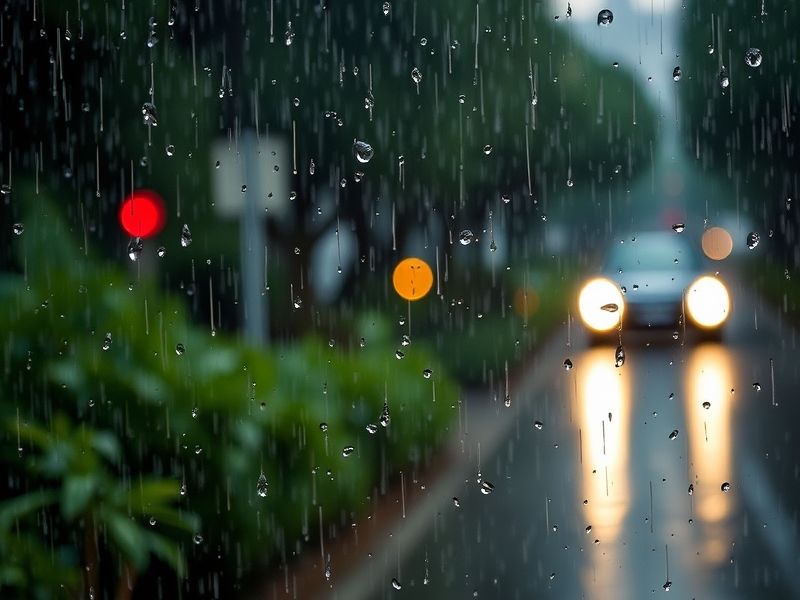
Just yesterday I was out in the garden, and the rain was pouring down in sheets. It got me thinking about how rain isn't always reliable, especially for farmers. But have you ever heard of Rainmaker and Atmo? These guys are changing the game in how we manage rainwater, and it’s pretty darn exciting.
Rainmaker is a technology that sounds almost too good to be true. It's a device that can literally turn air into water. Um, how does that even work, right? Well, it uses a process called atmospheric water generation (AWG), which captures moisture from the air and condenses it into liquid water. The best part? It can do this anywhere, even in arid climates. That means farmers in drought-prone areas can get the water they need without depending solely on unpredictable rainfall.
But here's the thing, Rainmaker isn't just a simple machine. It's a sophisticated system that uses AI to optimize water collection. The AI analyzes local weather patterns, humidity levels, and temperature to decide the most efficient times to generate water. This way, it maximizes its output and minimizes energy use. It's kind of like having a personal rain god in your backyard, you know?
Let me tell you something, though. When I was younger, I used to think that any tech that manipulated the weather was straight out of a sci-fi movie. But these days, it's becoming more of a reality. And Rainmaker is just one of the many innovations that show us the future isn’t as far off as we thought.
Now, let’s talk about Atmo. Atmo, short for atmosphere, is another game-changer. This technology focuses on cloud seeding, which I covered in the previous chapter about the science of rain and clouds [Remember what I said in the previous chapter?] Cloud seeding involves releasing particles into the clouds to promote the formation of raindrops. Atmo uses a combination of silver iodide and salts to do this, and the results are quite impressive. Farmers have reported significant increases in rainfall—up to 15% in some regions! That's huge, especially when you consider how much water is needed to grow crops.
But hold up, I almost forgot to mention the environmental benefits. Both Rainmaker and Atmo contribute to climate stabilization in their own ways. Rainmaker reduces the need for groundwater extraction, which is often a major cause of land subsidence and depleted aquifers. By generating water from the air, it helps preserve these vital resources. On the other hand, Atmo enhances the water cycle by increasing precipitation, which can help replenish rivers and lakes. It’s a win-win for both agriculture and the environment.
Oh, and another thing I find super cool about these technologies is how customizable they are. Rainmaker can be scaled to fit different needs, from small farms to large commercial operations. Similarly, Atmo can be tailored to target specific cloud formations, ensuring that the rain falls exactly where it’s needed most. This level of precision is pretty amazing, especially in an age where we’re trying to minimize waste and maximize efficiency.
However, it’s not all sunshine and rainbows. There are some challenges to these technologies. For Rainmaker, the initial cost can be quite steep, which might be a barrier for smaller farmers. Still, the long-term savings in water and energy costs often make it worth the investment. As for Atmo, there’s always the concern about potential side effects on the local ecosystem. After all, we don’t want to solve one problem only to create another, you know?
That reminds me of a story. A while back, a friend of mine who runs a vineyard told me about his struggles with inconsistent rainfall. He was considering investing in one of these systems, and I was like, ‘Dude, you’ve got to do it!’ The results were pretty fantastic. His grape yields increased, and he didn’t have to worry about water stress as much. It’s just that… how can I explain… these technologies can really make a difference when traditional methods fall short.
We all know that climate change is a real issue, and it’s affecting agriculture in profound ways. But here’s where Rainmaker and Atmo come into play. They offer solutions that can adapt to changing weather patterns, ensuring that farmers can still produce food even in harsh conditions. It’s not a perfect system yet—I won’t lie—but it’s getting there.
And get this, the advancements in these technologies are happening rapidly. We’re talking about breakthroughs that could revolutionize how we manage water resources in the next few years. It’s not just about making life easier for farmers; it’s about building a more resilient food system for all of us.
So then, the next time you see a rain cloud, maybe you’ll think about these innovative tools working behind the scenes to ensure that the rain falls where it’s needed most. We’ll dive deeper into this next chapter with some practical applications and success stories, but for now, let’s just appreciate how far we’ve come.
I’m not sure if you’ll agree, but these technologies feel like a beacon of hope in a world where water scarcity is a growing concern. Maybe I’m wrong, but I think they’re worth exploring further. After all, we’re all in this together, and every bit helps.

Practical Applications and Success Stories in Agriculture
Okay, so we’ve covered some really cool technologies in the last chapter, right? Rainmaker and Atmo, these aren’t just fancy names—they’re changing the game in agriculture. But how do they actually play out in the real world? Let’s dive into some practical applications and success stories that show just how impactful these advancements can be.
Just yesterday, I was chatting with a farmer who told me about his experience with the Rainmaker system. It’s kind of like a high-tech version of rainwater harvesting, but it’s designed to optimize water usage for crops. The guy said he saw a significant improvement in his yields—like, whoa, this is amazing! And get this, he didn’t even have to worry about the usual water shortages during the dry season. That’s a huge deal for farmers, man.
But let’s change subjects for a second. In recent years, there’s been a lot of talk about how technology can help us adapt to climate change. Rainmaker isn’t just about collecting rain; it’s about managing it in a way that’s super efficient. For instance, it uses smart sensors and AI to monitor soil moisture and weather conditions, which helps in deciding when and how much water to release. So, it’s not just a bucket catching rain—it’s a whole ecosystem of tools working together. (I won’t go into too much detail, but it’s pretty fascinating stuff.)
Alright, getting back to the success stories, one of the most notable is from a small farm in Kenya. A while back, they started using the Atmo technology, which essentially draws moisture out of the air to create water. Now, I know this sounds a bit sci-fi, but trust me, it works. The farm saw a 30% increase in their crop yield in the first year alone. The farmers were super happy, and you know, it’s not often that you see such drastic improvements with new tech.
Speaking of drastic improvements, I read a story about a group of farmers in India who adopted both Rainmaker and Atmo systems. Initially, they were a bit skeptical—like, can this stuff really work for us? But after a couple of seasons, they were singing praises. The combination of these technologies helped them through some really tough drought periods. One farmer even said it felt like a miracle. I guess miracles do happen when human ingenuity meets nature’s needs.
And this brings me to a crucial point: the integration of these technologies isn’t just about the tech itself. It’s about how it’s implemented and supported. Many of these farms received training and ongoing support from local agricultural experts. We all know that support is key, especially when you’re trying something new.
Going back to what I was saying earlier, the Rainmaker system isn’t perfect—yet. There are still some kinks to iron out, but the potential is undeniable. For example, one of the farmers in Kenya mentioned that the initial setup cost was a bit steep, but the long-term benefits totally outweighed the expenses. It’s just that… sometimes, these things take time to catch on, you know?
Now, let’s talk about the environment. We all know that water conservation is a big deal these days. These technologies not only help farmers but also have a positive impact on the climate. They reduce the need for groundwater extraction, which is a major issue in many regions. Plus, they minimize the use of chemical fertilizers by ensuring plants get the exact water they need, which is pretty awesome. (And I’m not just saying that because I tend to be a bit of an eco-warrior sometimes.)
But here’s the thing, folks: it’s not just about the tech. It’s also about the mindset. Farmers who adopt these systems need to be open to new methods and willing to learn. I admit I struggle with this sometimes—change is hard, right? But the results speak for themselves. Improved yields, better climate resilience, and happier farmers. That’s the trifecta we’re all aiming for.
That reminds me of a project I read about in one of my previous articles. Remember the one on mini-hydropower plants? (I published it a while back on ThinkNestHub.) It’s kind of similar in the sense that both projects are about harnessing natural resources in innovative ways. But while mini-hydropower focuses on energy, Rainmaker and Atmo focus on water—and in agriculture, water is life.
So, to sum up, these technologies are making a real difference. They’re helping farmers adapt to changing climates, improving yields, and making a positive impact on the environment. I’m not sure if you’ll agree, but it feels like we’re on the cusp of a new era in agriculture. And honestly, it’s super exciting!
Next up, we’ll dive deeper into the challenges and future developments of these rain management technologies. Stay tuned, and maybe check out that mini-hydropower article I mentioned earlier. Better not talk about this now, though. Let’s keep the focus on the rain and how it’s transforming the way we grow our food.
I hope this chapter gives you a good look at how Rainmaker and Atmo are already making waves in the field. And hey, if you’re a farmer or just someone interested in sustainable agriculture, maybe it’s time to give them a try. You never know, it might just be the game-changer you’re looking for.
🌙 If this resonated with you, what I left in the link will touch you even more. ✨ Sometimes, small discoveries make a big difference in our well-being. 🌿 I found something special that matches this moment of care and balance.
Change your life now https://amzn.to/3GedgiU
About
✨ My mission here is to spread knowledge and good ideas to the world in a simple way. Everything I share is the result of extensive research.
Comments
Post a Comment